
How to Import WooCommerce Orders from CSV

Importing WooCommerce orders from CSV requires correctly mapping customer details, purchased products, and order information so that each order is recreated accurately.
Unlike simple product imports, a single order can contain multiple line items that must be linked to the correct products. Customer information, order totals, dates, and statuses must also be preserved.
In this guide, we’ll show you how to import WooCommerce orders from CSV, check the field mappings, and preview the results before running the import.
What Makes a WooCommerce Order Import Different from a Product Import
A WooCommerce product import moves flat data: one row, one product. An order import moves relational data. Every order connects to customers, addresses, line items, coupons, refunds, taxes, and payment records, all stored in different database tables.
WooCommerce stores orders in wp_posts (as a shop_order post type) with financial details in wp_postmeta and, on modern WooCommerce versions, in the High-Performance Order Storage (HPOS) tables. Customer records live in wp_users, and line item data is stored as serialized order item entries rather than simple text.
Here are a few things that make order imports fail when done casually:
- Line items have no direct equivalent in CSV. The products referenced in an order must already exist in your store, matched by SKU or product ID. If they don’t, the order imports as an empty shell with nothing attached.
- Customers need to exist before orders reference them. An order linked by customer email or user ID will fail to attach if the customer record isn’t in the database yet.
Given how interconnected order data is, the import workflow has to handle these relationships, not just move rows into a table.
How to Import WooCommerce Orders from CSV
The two requirements above are exactly where most WooCommerce order import plugins fall short.
WP All Import covers each of them. It maps order fields like billing and shipping addresses, line item data, order totals, and status values directly into WooCommerce. Its Automatic Setup reads any CSV layout without requiring a fixed schema and builds the field mapping on upload. Orders import through background batches, so large order histories complete without server timeouts.
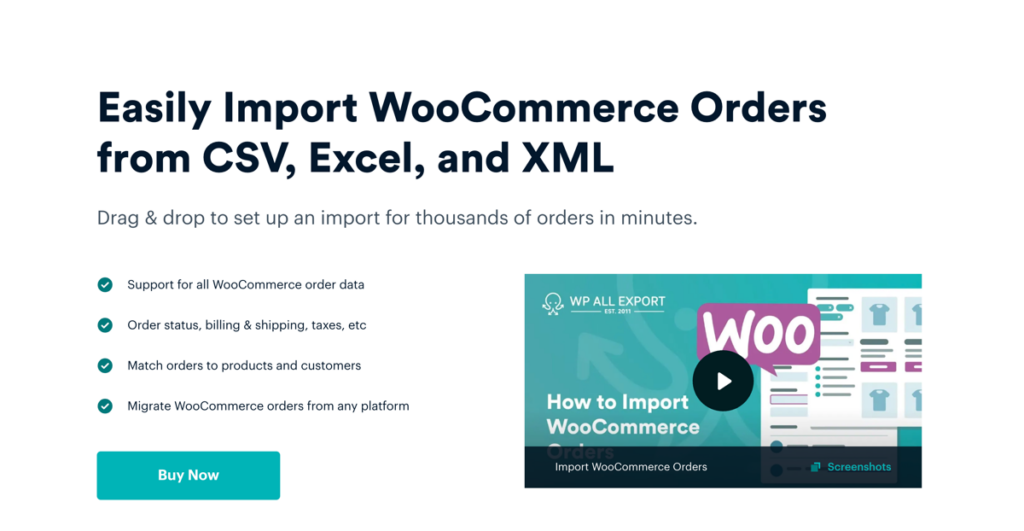
For this walkthrough, I’ll use WP All Import. When the file has anything unusual in it, the pre-filled template editor lets you review the mapping before anything touches your database, and the whole workflow runs in four steps.
Step 1: Load Your WooCommerce Orders CSV File
Once WP All Import and its WooCommerce add-on are installed and activated, open All Import › New Import and click the Set up automatically banner at the top.
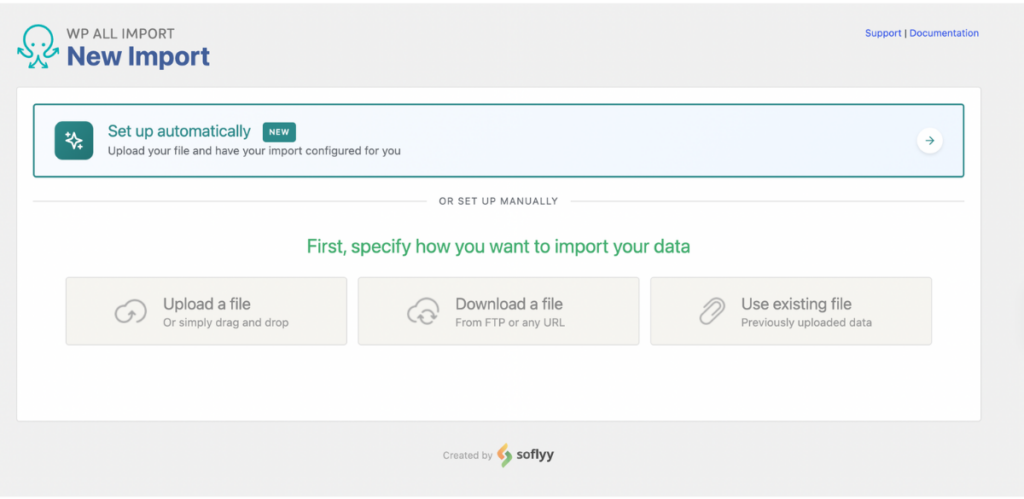
The wizard accepts the file four ways: a direct upload from your computer (CSV, Excel, or XML, up to 256 MB), a download from a hosted URL or Google Sheets link, a file already sitting in /wp-content/uploads/wpallimport/files/, or a direct pull from an FTP/SFTP server. For this order import, I’ll choose the upload option and select the CSV file.
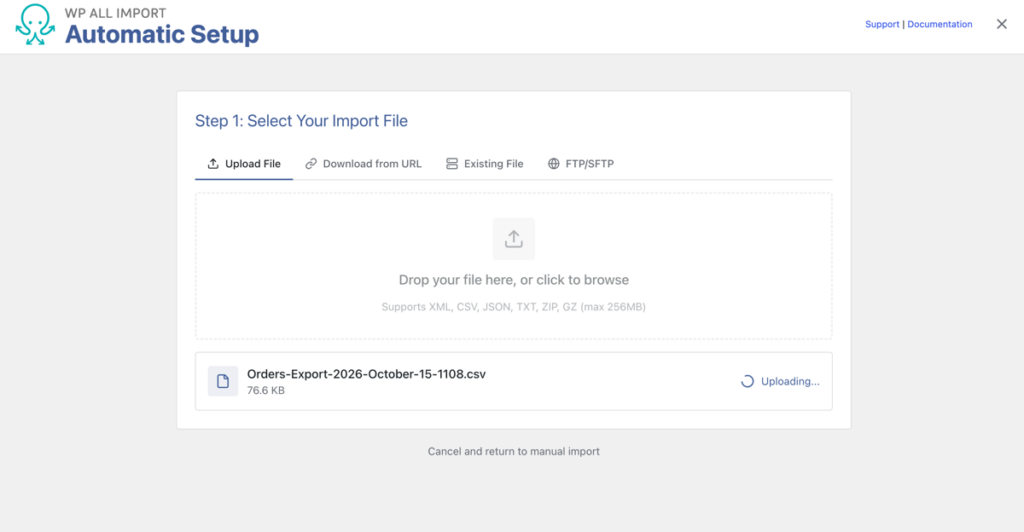
Under Choose What to Import, select WooCommerce, then Orders.
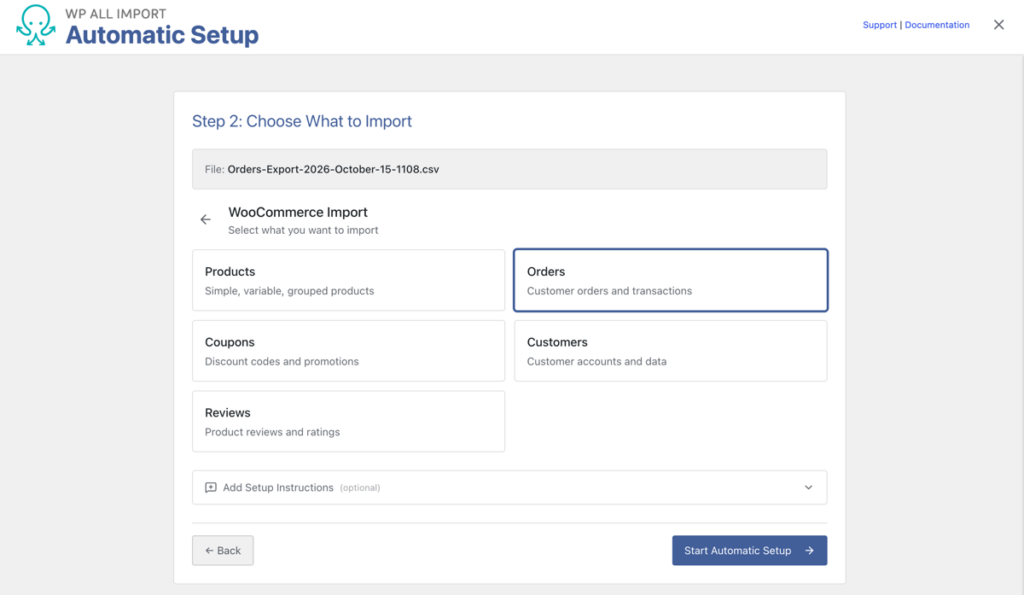
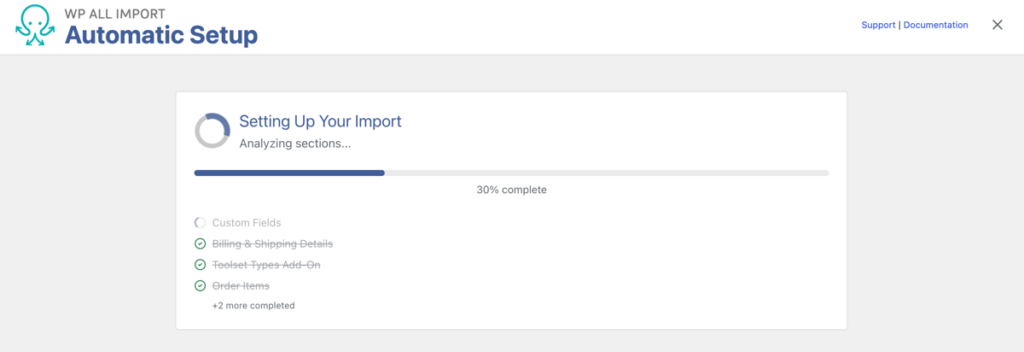
Before starting the analysis, expand Add Setup Instructions if your uploaded order record needs explanation, like “Line items use pipe-delimited data with product SKU, quantity, and total” or “Match customers by the email column.” Then click Start Automatic Setup, and the plugin reads your file and maps the order structure on its own.
Step 2: Check the Mapped WooCommerce Order Fields
When the analysis finishes, you’ll see the Your Import Is Ready card. It reports the detected order count and the number of fields mapped from your file. Click Field Mappings to expand the checklist.
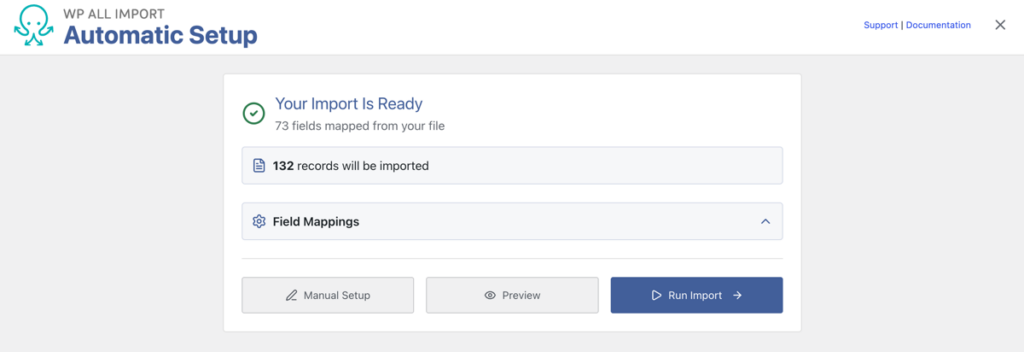
Four groups of rows deserve a close look on an order import: customer details (billing name, email, phone, and addresses), order records (order total, shipping total, taxes, discounts, and payment method), the line items column holding purchased products with quantities and prices, and the status and date columns that decide how each order behaves after it lands.
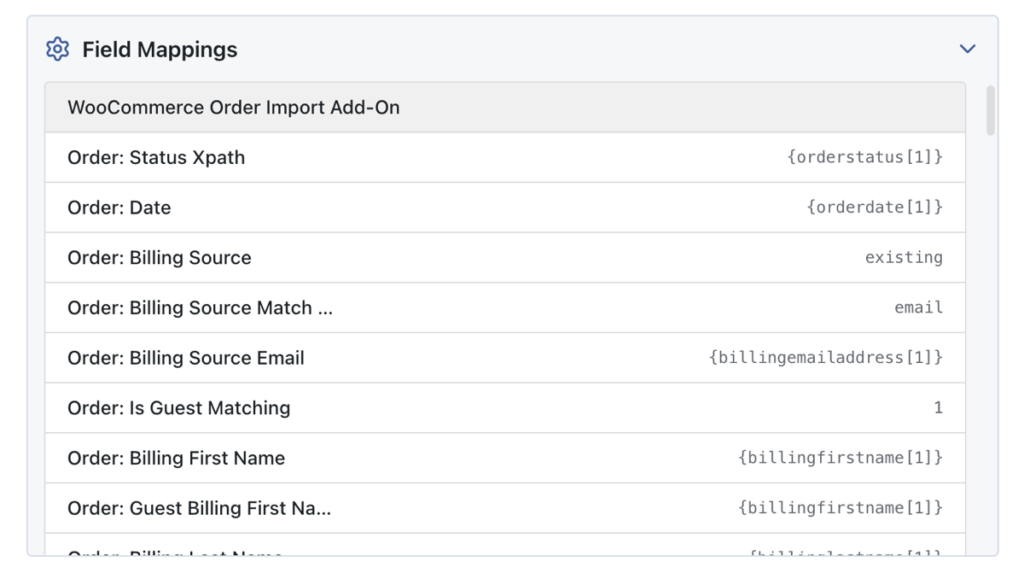
If a column landed in the wrong field, click Manual Setup to open the template editor and fix it. If everything maps correctly, you’re ready to preview.
Step 3: Preview Each Order Before It Imports
Click Preview and the panel opens on the same screen, next to your field mappings. The preview shows the WP Admin View, which displays the WooCommerce order edit screen exactly as it will appear in your admin, with billing and shipping addresses, line items, and totals in the correct admin fields.
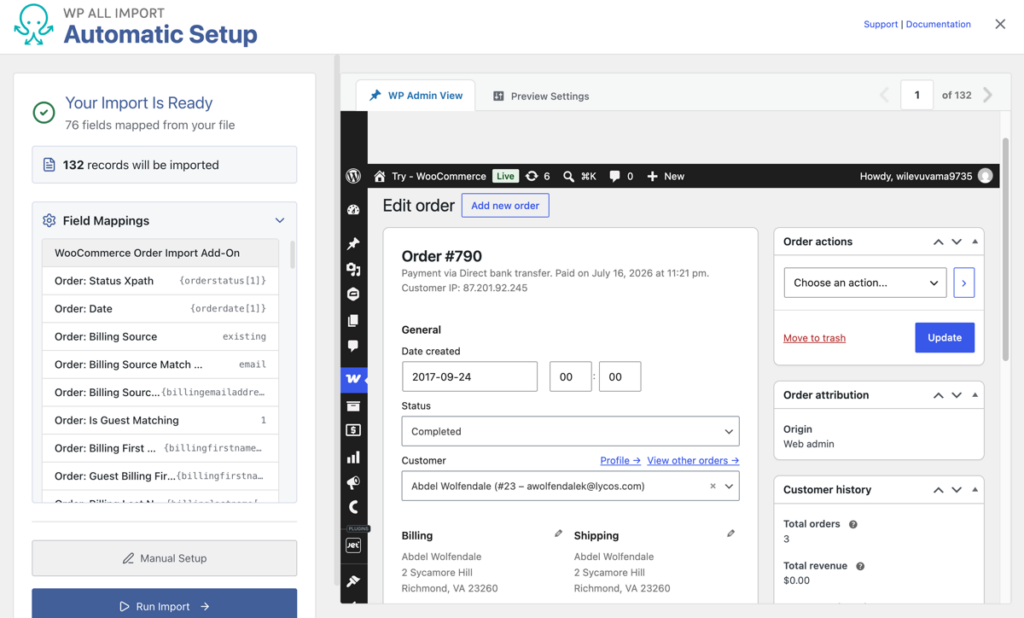
Use the arrows to step through a few orders, starting with any that have multiple line items, coupons, or refunds. Those are the records where a mapping mistake shows up first.
Step 4: Run the WooCommerce Order Import
When the preview looks perfect, click the blue Run Import button on the summary card. WP All Import skips the intermediate configuration screens, processes the file in background batches so a few thousand orders can import without timing out, and shows a summary of what was created.
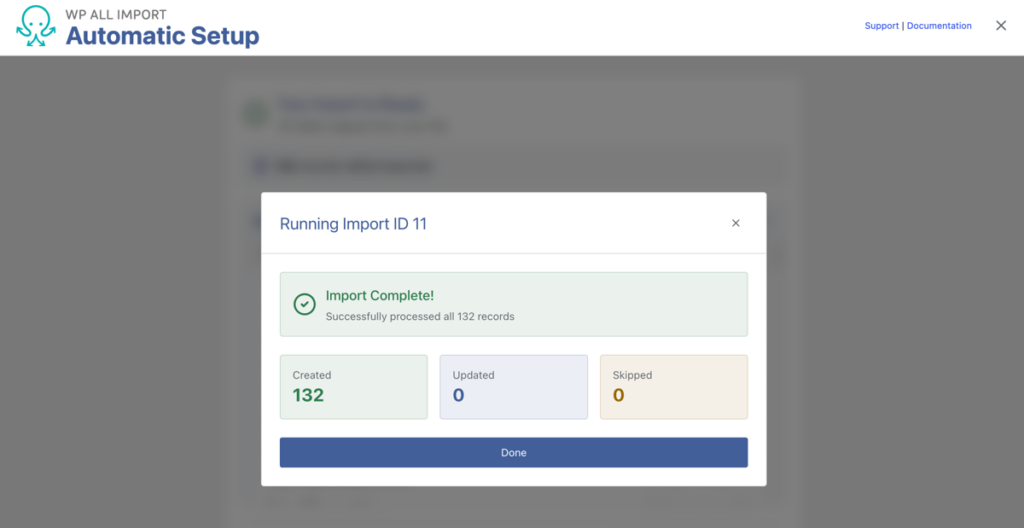
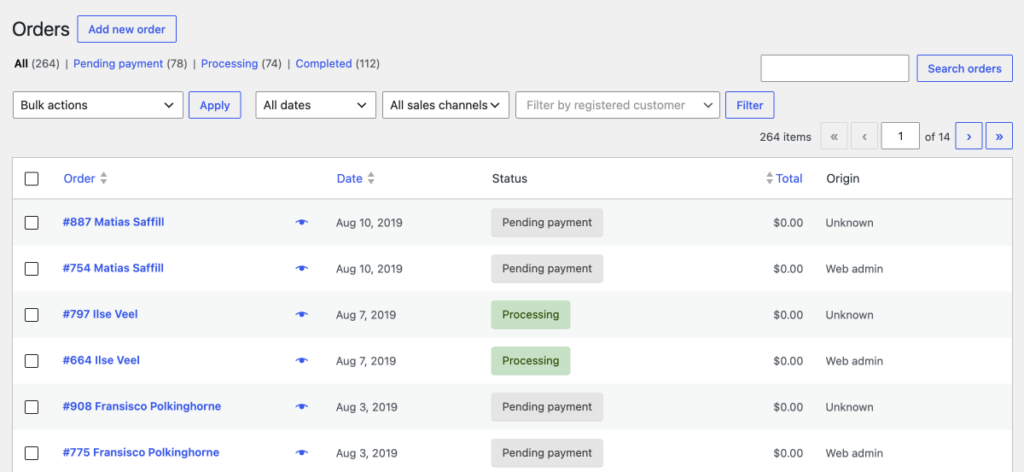
Open WooCommerce › Orders afterward and spot-check a few records: open an order with multiple line items, confirm the customer is attached, check the status, and verify the total matches the original export.
The Order Details Worth Checking in Manual Setup
Automatic Setup handles most order files on its own, but orders carry more data types than other post types, and a few of them deserve a closer look before the import runs. Clicking Manual Setup on the summary card opens the pre-filled template editor, where everything the automatic mapping configured can be reviewed and adjusted. Here’s what I check every time.
1. Mapping Line Items to Products
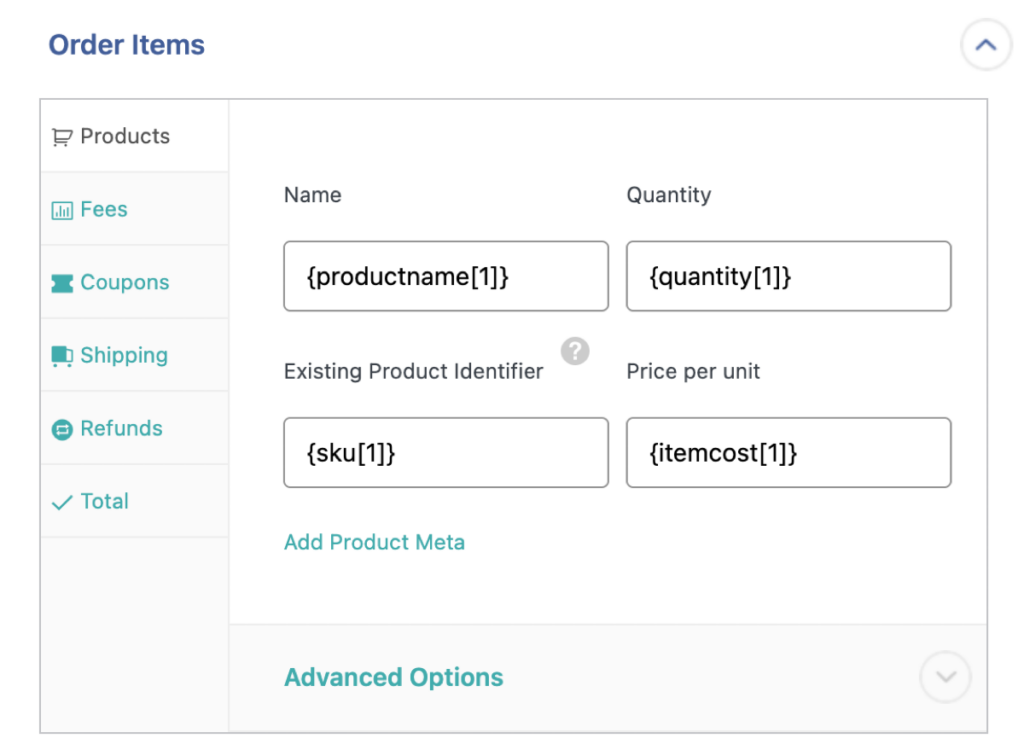
Line items are the part of an order import that trips people up most often, because a CSV cell can’t natively hold a list of products. The data needs structure inside the cell, and the format most exports use is pipe-delimited, like sku:woo-album|quantity:1|total:19.99, with multiple items in one order separated by semicolons. Each item needs three things: a product identifier (SKU or product ID), the quantity, and the line total.
In the template editor, this is where the Order Items section comes in. Open it and check how the product identifier is being used, since that value is what attaches each line item to a real product in your store. The Order Items section also contains separate tabs for the other order data, including Shipping, Fees, Taxes, Coupons, and Refunds, so give each tab a quick look to confirm the corresponding CSV columns were picked up and mapped correctly.
2. Linking Each Order to the Right Customer
An order’s customer can be matched three ways: by email, by user ID, or by username. Email is the one that works across platform migrations, since email addresses stay with the customer even when everything else changes. User ID is reliable when migrating between two WooCommerce stores with identical user tables.
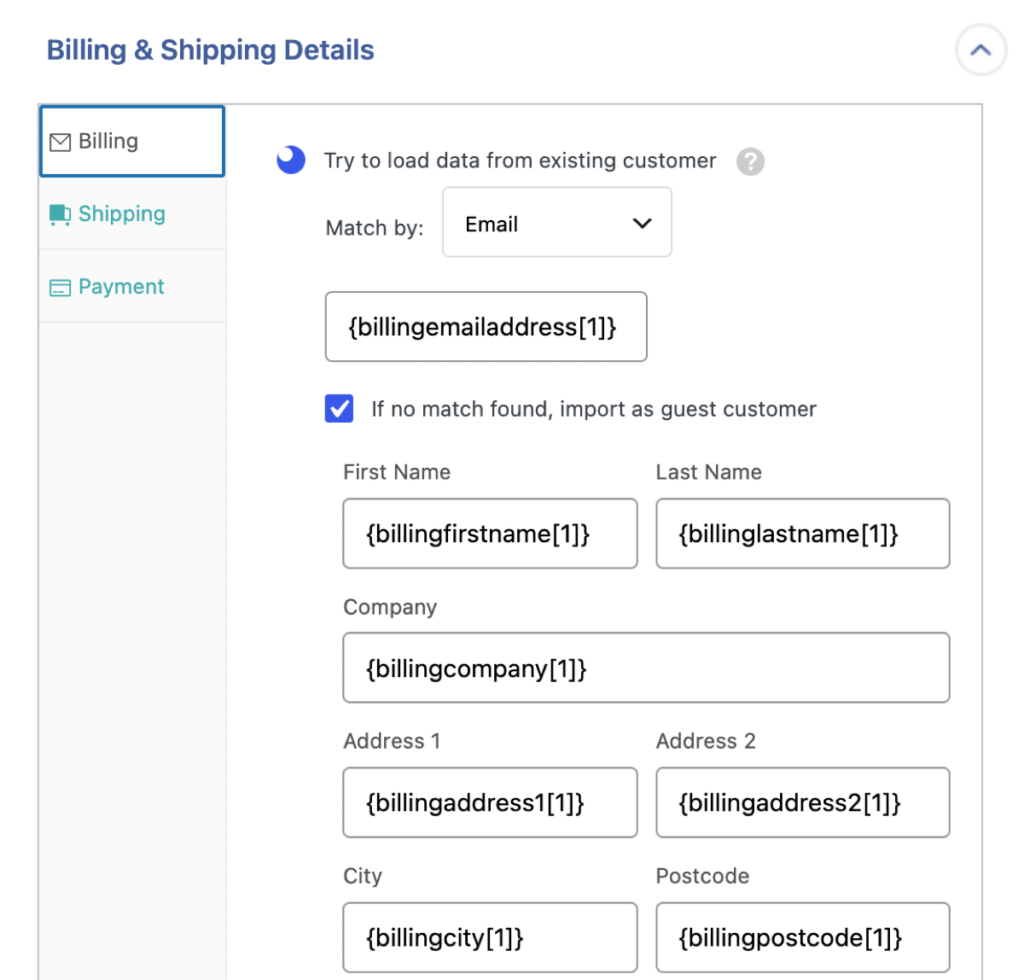
When a customer matches, their billing and shipping addresses, order history, and total spend figures update on their profile. When nothing matches, the order imports as a guest purchase, which is usually the right outcome for an old order whose customer no longer exists.
3. Order Status and Order Dates
Two columns decide how an imported order behaves in your store. The status column should map straight from your CSV, because WooCommerce tracks each order as pending, processing, on-hold, completed, cancelled, refunded, or failed, and importing everything as “completed” when the original records say otherwise corrupts refund histories and customer service records.
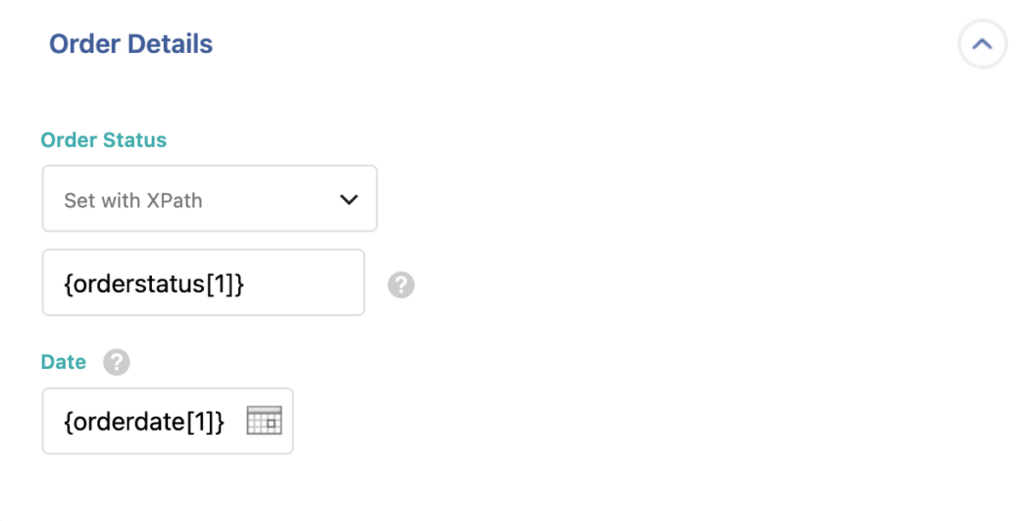
Order dates work the same way. Historical orders should import with their original purchase dates, not the day of the import. Otherwise, years of order history bunch up on a single day, and revenue reports become useless. Mapping the date column lets the plugin write the original timestamps into the order records.
Final Thoughts – Import WooCommerce Orders from CSV
WooCommerce doesn’t offer a built-in way to import orders. The product importer stops at products, which leaves orders to plugins, and the plugin you pick decides whether line items attach to real products, customers link to the right records, and original dates and statuses survive the import.
WP All Import lets you import WooCommerce orders from any CSV file. Its Automatic Setup maps order fields like billing and shipping addresses, line items, totals, and statuses on upload. The Order Items section in the template editor links every purchased product by SKU or product ID. Customer matching attaches each order by email or user ID. With the preview panel showing each order before anything commits, a migration that used to be an afternoon of cleanup becomes an import that leaves an accurate, complete order history behind.
More Questions on Importing WooCommerce Orders from CSV
Can I import WooCommerce orders from CSV for free?
The built-in WooCommerce importer handles products only, not orders. WP All Import lets you import orders from CSV, including customer details, line items, order totals, statuses, and dates, and its Automatic Setup maps the columns to the correct order fields on upload.
What columns does a WooCommerce orders CSV need?
A WooCommerce orders CSV needs the order identifier, order date, order status, customer email, billing address columns, and line item data with the product SKU or ID, quantity, and total at minimum. Shipping address, payment method, and coupon or refund columns make the order history complete where they exist.
Will importing orders send emails to my customers?
No. WP All Import writes order records directly into the database without sending transactional emails. Keep the email sending option unchecked during import, and customers receive nothing from the migration, even as order statuses are set or changed.
How do I update existing orders from a CSV without creating duplicates?
To update existing orders from a CSV without creating duplicates, set the original order number or ID as the Unique Identifier in WP All Import using the Auto-detect button on the Import Settings screen. Re-running the import then matches incoming rows to existing orders and updates them in place instead of creating new records.
Further Reading
Get Oxygen
Build it your way with Oxygen.
Not per year, not per site, not per seat. 60 day money back guarantee.